Organizational Assessment
Most organizations know something is wrong before they can name it. An assessment names it.
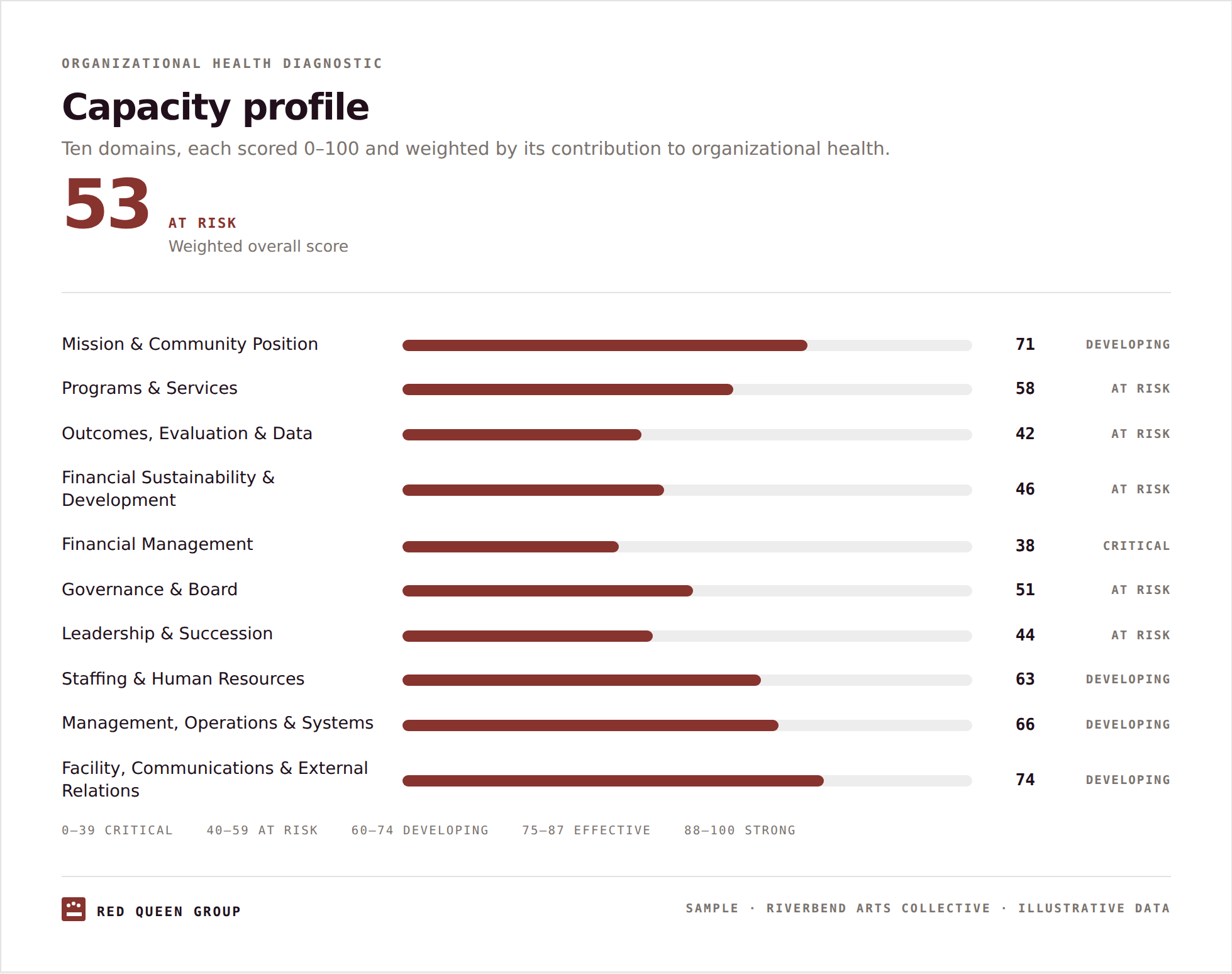
An organizational assessment is a structured examination of a nonprofit's major functional areas, conducted from outside the organization and grounded in evidence rather than impression. It is most useful at the points where the stakes are highest: a leadership change, a structural deficit, a shift in the funding environment, or a strategic planning process that needs a foundation more solid than the leadership's own account of itself.
The areas examined are agreed with the leadership at the outset. They typically include:
Mission and community
Programs and services
Outcome evaluation
Management, staffing, and structure
Financial sustainability
Leadership
Governance
Advocacy and public policy
Technology
Findings are built from a review of the organization's own documents and from interviews with board members, staff, funders, collaborative partners, and the people the organization serves. A theme appears in the report only when more than one stakeholder raises it. Each area resolves into identified strengths, identified challenges, and recommendations — and the recommendations are sequenced, so the report states what has to happen first and what should not be started yet.
The assessment is presented first to the Executive Director and Board Chair, then to the full board and senior staff. The purpose of those conversations is not to deliver a verdict. It is to give the leadership a shared and accurate picture of where the organization stands, from which its own decisions follow.
Typical duration is three to four months.